
Menu
Art & Heritage: The Digital Renaissance
Applying Physics-Native AI to Preserve, Authenticate, and Understand Our Cultural Masterpieces
The Challenge: Seeing Beyond the Varnish
Classical art is a window to our past, but this window is often clouded by time. Varnish yellows, pigments fade, and canvases crack. For art historians, conservators, and collectors, understanding a piece's true state, its history, and even its authenticity is a monumental challenge.
Conventional digital analysis can enhance an image, but it struggles with the same limitations as the human eye—it only sees the surface. It cannot easily distinguish the "signal" of the artist's original brushstroke from the "noise" of a thousand micro-cracks. It cannot identify an anachronistic pigment hidden within a restoration. And it cannot offer a definitive, objective, and interpretable "fingerprint" of an artwork.
The Styx AI Solution: The Physics of Art
Our technology moves beyond surface-level enhancement. We apply our "Physics-Native" AI paradigm to deconstruct art as a physical object. An oil painting is not just a picture; it's a complex, layered structure of minerals (pigments) suspended in oil on a textured canvas.
Our ISED and Sauron engines analyze the spectral-relational coherence of the artwork. By analyzing the intricate relationships *between* color channels (e.g., how red light reflects versus blue light), we can create a "fingerprint" of the artwork's physical properties. This allows us to digitally separate the artist's original work from the degradation of time.
Digital Image of Painting
↓
Styx AI Physics-Native Analysis
(Analyzes Physical & Spectral Fingerprints)
(Analyzes Physical & Spectral Fingerprints)
↓
Identified Underdrawing & Canvas Texture
Separated Pigment & Varnish Layers
Applications for Art & Heritage
Our technology provides a transformative toolset for curators, conservators, authenticators, and auction houses.
Forensic Authentication (The "Cerebus" Engine)
Our Cerebus forensic engine is not limited to deepfakes. It can analyze the "physical plausibility" of an artwork. By analyzing the spectral fingerprint of pigments and the statistical texture of brushwork, it can detect anomalies that point to forgery, such as an anachronistic pigment (e.g., "Titanium White" in a purported Rembrandt) or a signature with an inconsistent textural "fingerprint."
ANOMALY
"Evidentiary Map" highlights a forged signature
Virtual Restoration & Analysis (The "IS3" Engine)
Our IS3 engine's ability to "see through the stain" is directly applicable to art. By analyzing the underlying physical properties, we can create "virtually restored" images that digitally remove the effects of yellowed varnish and grime, revealing the artist's original color palette. Furthermore, this analysis can often "see" through the top layer of paint to reveal pentimenti (the artist's original sketches or changes) on the canvas below, providing priceless insight into their creative process.
Perceptual Archiving & Quality (The "Trident" Engine)
When a museum digitizes a masterpiece, ensuring the highest possible fidelity is essential. Our Trident Prime engine provides a "perceptual quality score" that is vastly more accurate (+91.9% uplift) than standard metrics. This allows archives to validate their digitization process and use our Juggernaut framework to compress these massive files in a way that is perceptually lossless, preserving the art for future generations.
Aesthetic Search & Discovery (The "Heimdall" Engine)
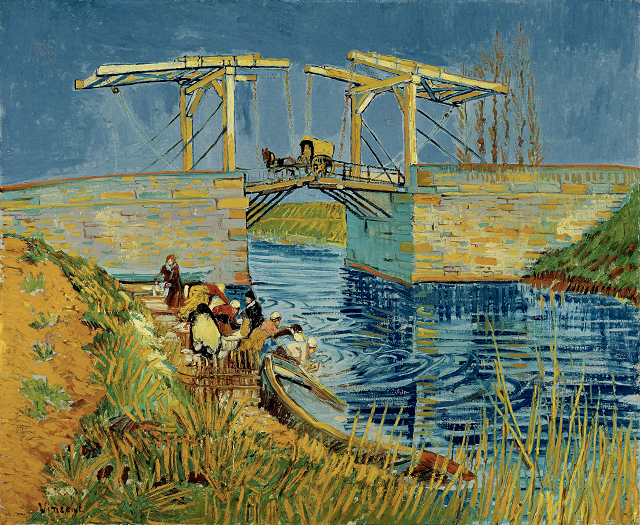
For an art historian, finding "all paintings with similar brushwork to Van Gogh" is a manual, life-long task. Our "Heimdall" (perceptual search) engine makes this possible in seconds. We can "fingerprint" an entire collection, allowing researchers to search not by title or artist, but by aesthetic similarity—finding other works with similar compositional structure, color palettes, or textural properties, revealing hidden connections and influences.
Partner with Styx AI
We are seeking collaborations with museums, conservation labs, auction houses, and cultural heritage organizations to apply our technology to the world's most significant artworks.
Van Gogh
The Stary Night
The Starless Night
The Starless Night
The Starless Night
The Starless Night
The Starless Night
Through the art darkly.
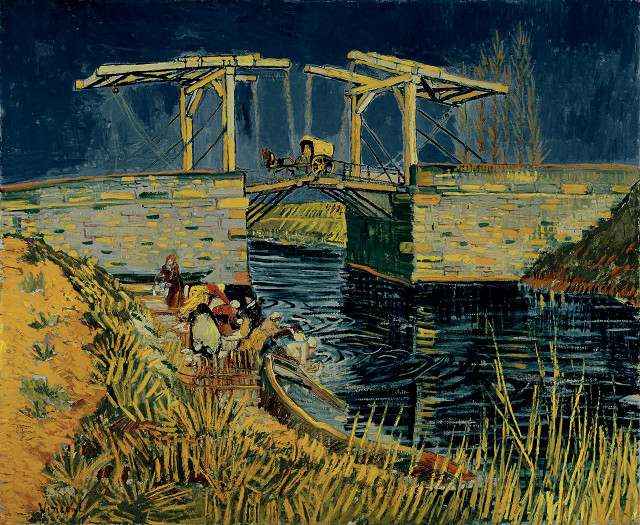


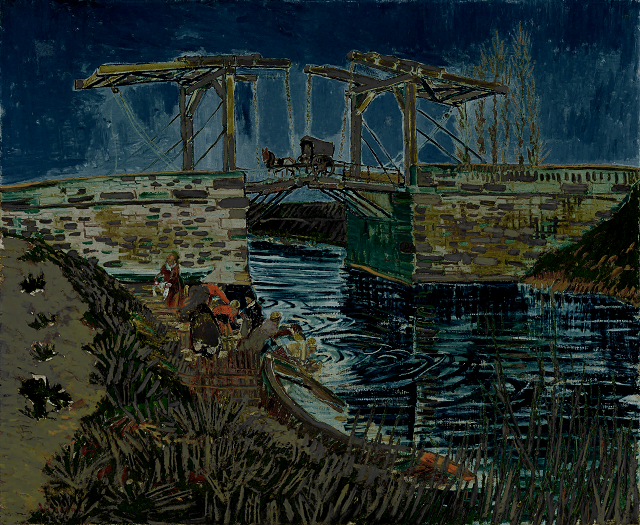
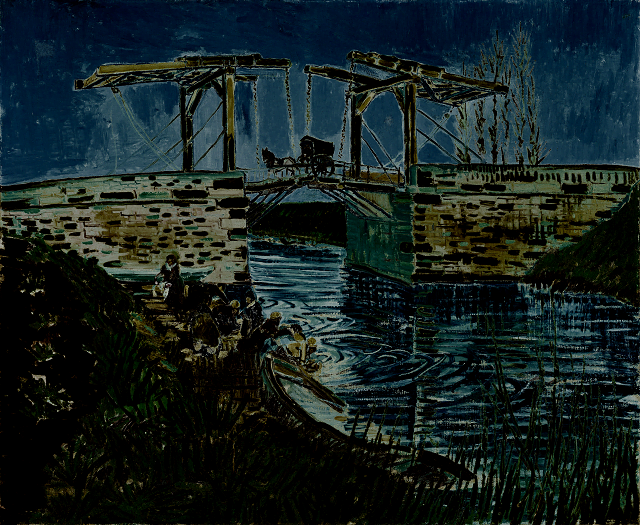
and the night became darker
Video Art